



Crypto moves fast, and so do the tools we use to chase it. Whoa! My first look at a live order book still gives me a small rush. Initially I thought bots were the whole story, but then I noticed retail flows moving price before bots even blinked. Something felt off about the way volume spikes were reported across chains... I kept digging.
Here's the thing. A dex aggregator can hide as much as it reveals. When you mash together liquidity from ten pools you usually get better fills, though the analytics can blur which pool actually moved the needle. For traders that matters, because attribution changes how you size a position and where you set your stop. Really? Yes — and here's why.
On-chain charts are gorgeous to stare at. But beauty doesn't pay for a bad fill. My instinct said trust the tape, yet the tape itself can be warped by routing and wrapped tokens. I remember a trade where the candlestick screamed buy, but the aggregator routed through thin liquidity and I ate slippage. Wow!
Let me be honest — I'm biased toward live, granular feeds. I like seeing per-pool volume, not just aggregated bars. Okay, so check this out—when you break volume down by pool and chain you can spot spoofing, sandwich attacks, and genuine market interest. That kind of visibility flips your risk model; you stop treating all volume as equal and start weighting where real buyers are.
Initially I thought a big dong of TVL meant deep liquidity everywhere, but then I realized that much of that TVL is immobile or support for farming, not meant to absorb a taker order. On one hand large TVL calms you; on the other hand that liquidity might be spread thin across dozens of pairs—so actually, wait—it's complicated. Hmm... my gut and the math sometimes disagree.
Here's a practical pattern I've used. First watch for synchronized volume spikes across two or three pools. Then check whether the aggregated price move coincides with unique wallet activity. If both line up, that's usually real demand. If only the aggregator shows volume while the native pool reports nothing, treat it as suspect. This approach isn't perfect. Nothing is perfect in DeFi.
Wow, that last part matters. A lot of analytics dashboards smooth and resample data, and smoothing hides microstructure. Microstructure is where the market tells you its true intention. So you want a chart that updates tick-by-tick and shows routing choices, not just a vanity candlestick. Somethin' as simple as seeing which AMM provided the liquidity can save you a bad trade.
If you're using tooling, here's where a dex aggregator fits in. It optimizes execution across sources, reduces average slippage, and aggregates depth. But it can also paint a prettier picture than the reality supports. My advice: pair an aggregator with a native-pool view. That duality gives you both the efficient fills and the forensic sightline to see whether the volume is honest or engineered.
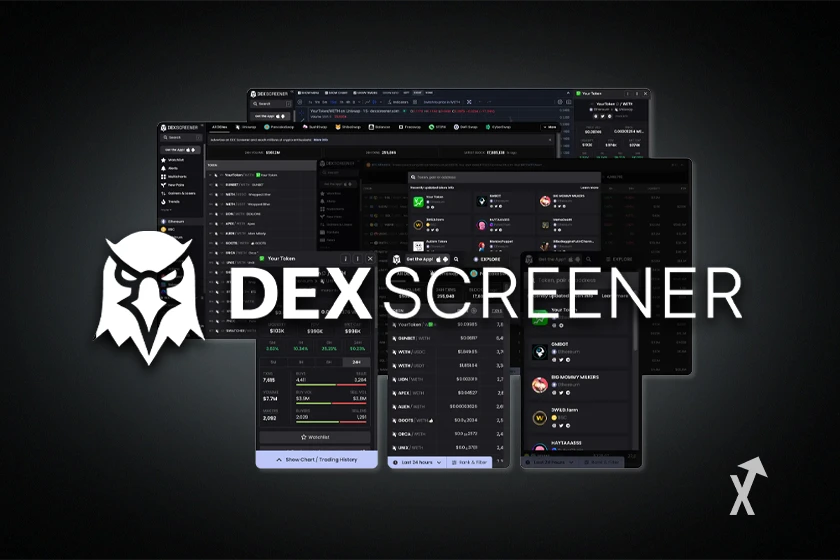
How I use real-time crypto charts with dex aggregators and why you should too — a quick workflow featuring dex screener
Step one is monitoring aggregate volume on a per-minute basis. Step two is splitting that volume by pool and routing path. Step three is cross-referencing wallet clusters and on-chain memos. I do this with tools that let me hop from a chart into a pool explorer in seconds, and one of my go-to quick-check pages is dex screener because it makes spotting cross-pool anomalies fast.
You'll notice a pattern: when the real buyers show up, spreads tighten and multiple pools contribute liquidity in a consistent direction. When manipulative flows appear, you often see one pool dump most of the volume and a handful of wallets cycling trades. That signal is subtle, but it's repeatable. I use it to reduce position size when the market looks noisy, and to add when liquidity quality is high.
One more thing that bugs me: many traders focus purely on candle patterns and ignore routing cost. A trend can look pristine on a chart while your entry gets eaten by a routing path that slices across five pools. Execution slippage is an execution cost, plain and simple—treat it like fees. Very very important.
Okay, so what about front-running and MEV? There is no silver bullet. But if your monitoring layer shows sudden gas price spikes coinciding with a volume burst routed through a thin pool, you can infer increased MEV risk and either slow-roll your order or split it. On the flip side, consistent multilateral fills across deep pools usually indicate safer execution.
I'll be honest: some of this requires practice. You won't get perfect instincts from a single weekend of chart-watching. But if you consistently compare aggregated charts against pool-level feeds you develop pattern recognition that pays off. My instinct sharpened after getting burned a few times; now I pause before trusting aggregate volume blindly.
There's also an operational point. If you're coding bots or manual strategies, ingest real-time volume from multiple sources, normalize timestamps, and prioritize latency. Initially I optimized for raw accuracy, then realized latency matters more for execution decisions. On one hand accuracy informs strategy; on the other, latency determines whether you can act on that info.
FAQ — quick practical answers
Q: Should I trust aggregated volume bars?
A: Use them, but verify. Aggregates are useful for trend context, but always cross-check with pool-level volume and wallet activity. If an aggregated spike isn't corroborated on native pools, be skeptical.
Q: Can a dex aggregator reduce slippage reliably?
A: Generally yes, for most pairs. Aggregators route to find the cheapest execution, but routing can route through thin bridges or wrapped tokens; monitor the path and watch for unexpected token hops.
Q: What red flags should I watch for on charts?
A: Single-pool spikes, repeated same-wallet trades, sudden gas-price surges, and volume that appears only after aggregation are all red flags. Also, watch for inconsistent timestamps across feeds.





评论